
In the UK, one of the first big decisions for business owners is choosing the right business structure. Deciding between being a sole trader or setting up as a limited company can have a big impact on how you handle money, pay taxes, and manage risks in your business.

Choosing the Right Business Structure
Choosing the right setup for your marketing agency is important because it affects almost everything—from how much tax you pay to how people see your business. Most new agencies choose between being a sole trader or a limited company. Both options have pros and cons, and your choice should match your business goals and how you want to run your company.
Sole Trader
A sole trader is someone who owns and runs their business alone. This setup is simple and popular for small businesses because it’s easy to start and manage. Here are the key points about being a sole trader:
- Complete Control: You are the boss and make all the decisions yourself, which gives you full control over the business.
- Earnings Are Yours: All the money your business makes is yours after you pay your taxes.
- Unlimited Liability: You are personally responsible for any business debts. If your business owes money, you must pay it, even if that means using your savings or selling personal belongings.
Limited Company
A limited company is a separate legal entity from its owners (called shareholders), which means the business is treated as a separate being. This setup has some key benefits:
- Separate Finances and Limited Liability: The company’s money and your personal money are kept separate. If the company owes money, only the business assets are at risk, not your personal things like your home or car.
- Formal Structure and Compliance: Limited companies have more rules to follow, including keeping good records, filing accounts every year, and sharing some financial information publicly.
This structure can be better if you want to grow your business, attract investors, or improve how your business looks to others.
Comparing Sole Trader vs Limited Company
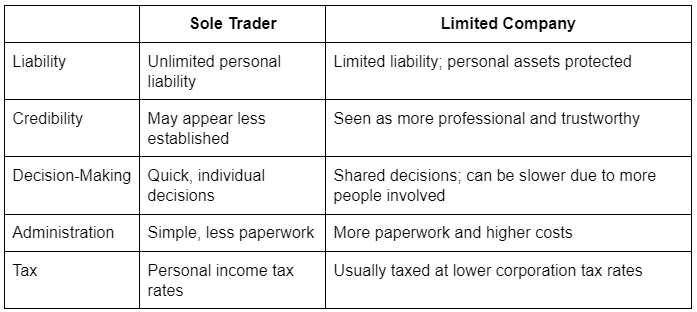
As an Agency Owner you must consider several factors when deciding whether to be a sole trader or a limited company. Here’s a simple comparison:
Benefits and Challenges of a Limited Company
Starting a limited company has several benefits that might make it the right choice for your business:
- Protection: Personal belongings, like your house or savings, are safe if the business has financial trouble. Only the company's assets are used to pay off debts.
- Tax Efficiency: Limited companies usually pay corporation tax, which can be lower than personal tax rates, meaning you might save money on taxes.
- Professional Image: A limited company can make your business look more professional and trustworthy to clients, suppliers, and investors.
- Easier Access to Funding: It’s often easier for limited companies to get money from investors because it’s a separate entity with legal protections.
However, running a limited company also has some challenges:
- More Paperwork: Limited companies must deal with more paperwork, like filing annual accounts and reports. This takes time and sometimes requires hiring professionals.
- Higher Costs: It costs more to start and run a limited company compared to being a sole trader. You need to pay for things like registration and accounting services.
- Less Privacy: Limited companies must share some financial details publicly, which means anyone can see how the company is doing.
- Slower Decision-Making: With more people involved, like directors or shareholders, decisions can take longer because you need everyone to agree.
Choosing the Best Fit for Your Marketing Agency
When deciding between being a sole trader or a limited company, consider your business size, future plans, and how much risk you are comfortable taking.
- Size of Your Agency: If your agency is small and just starting out, being a sole trader might be easier because it’s simple and costs less. But if you have a larger agency or plan to hire people, a limited company might be better.
- Growth Plans: If you plan to grow quickly, a limited company might be more beneficial because it allows for easier investment and protects personal assets. For slower, steady growth, staying as a sole trader may be more manageable.
- Risk Tolerance: Sole traders take on more personal financial risk because they are personally liable for business debts. A limited company provides a layer of protection, as only the company’s assets are at risk.
Conclusion
Choosing between operating as a sole trader or a limited company is a big decision for marketing agency owners. As a sole trader, you enjoy simplicity and full control but face unlimited liability. In contrast, a limited company offers limited liability and better tax efficiency but comes with more paperwork and costs.
Before making a decision, think carefully about your business needs, financial situation, risk tolerance, and growth plans. Talking to a financial advisor can also help you get advice tailored to your situation. No matter which path you choose, understanding these structures will help you make the best decision for your agency’s success.
Further Reading
For those eager to know more about operating your marketing agency as a sole trader or limited company, check these articles from HMRC on What a sole trader is and Limited companies
Questions agency owners ask
What are the advantages of being a sole trader for my marketing agency?
Being a sole trader gives you complete control over your business, allowing you to make all decisions yourself. It is also simple to start and manage, making it a popular choice for small businesses. Additionally, all the earnings after taxes are yours.
What are the benefits of setting up a limited company for my marketing agency?
A limited company offers separate finances and limited liability, meaning your personal assets are protected if the business incurs debts. It can also enhance your professional image, making your business appear more trustworthy to clients and investors. Furthermore, limited companies often find it easier to access funding.
What are the main challenges of running a limited company?
Running a limited company involves more paperwork, such as filing annual accounts and reports, which can be time-consuming. There are also higher costs associated with starting and maintaining a limited company compared to being a sole trader. Additionally, limited companies have less privacy, as they must share some financial details publicly.
How do I decide between being a sole trader or a limited company for my agency?
Consider the size of your agency, your future growth plans, and your comfort level with risk. If your agency is small and just starting, being a sole trader might be simpler and more cost-effective. However, if you plan to grow quickly or hire staff, a limited company could provide better protection and investment opportunities.
What should I think about before choosing a business structure for my marketing agency?
Before making a decision, reflect on your business needs, financial situation, risk tolerance, and growth plans. It's also wise to consult with a financial advisor for tailored advice. Understanding the differences between a sole trader and a limited company will help you make the best choice for your agency's success.