If you’re selling a property, business, shares, or cryptocurrency, Capital Gains Tax (CGT) can take a significant bite out of your profits—unless you plan ahead.
Recent tax years brought major changes to CGT, with higher rates and a reduced tax-free allowance, and those rules still apply in 2026/27. If you don’t structure your finances properly, you’ll be paying more tax than necessary.
How Much Is Capital Gains Tax in 2026/27?
CGT applies to profit made from selling an asset—not the total sale price.
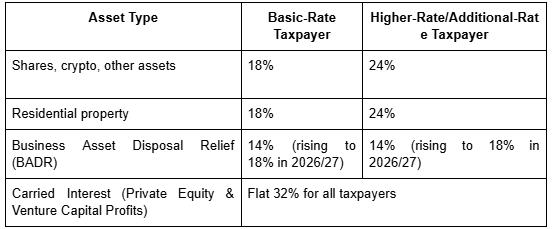
CGT Rates for 2026/27:
CGT Allowance for 2026/27:
- Individuals: £3,000 (down from £6,000 in 2023/24)
- Trusts: £1,500
If you exceed your CGT allowance, you must report your gains and pay within these deadlines:
- Property sales – Report and pay within 60 days
- Other assets (shares, crypto, business sales, valuables, etc.) – Report by 31 January following the tax year
Plan asset sales across tax years to maximise your £3,000 exemption each year.
How to Legally Reduce Your CGT Bill in 2026/27
Most people assume CGT is unavoidable—but with the right planning, you can reduce or eliminate it legally.
1. Transfer Assets to Your Spouse or Civil Partner
- Transfers between spouses are tax-free—so you can double your exemption to £6,000.
- If one partner is in a lower tax bracket, transferring assets to them before selling can cut CGT from 24% to 18%.
Tip: Before selling, check if transferring to your spouse could save tax.
2. Offset Your Capital Gains with Losses
- If you make a loss on an investment or property, you can declare it to HMRC and offset it against your current or future gains.
- Losses must be claimed within 4 years.
Tip: Review your portfolio for underperforming assets before selling profitable ones.
3. Use Your CGT Allowance Every Year (Bed & ISA Strategy)
- Your £3,000 CGT allowance resets every year—it cannot be carried forward.
- Sell enough assets each year to use the full allowance, keeping gains CGT-free.
- Bed & ISA strategy – Sell assets, then rebuy them inside an ISA, permanently shielding future gains from CGT.
Tip: Use ISAs and pensions to permanently remove investments from CGT liability.
4. Claim Principal Private Residence (PPR) Relief on Property Sales
- If you’re selling your main home, you don’t pay CGT—but if you’ve ever rented it out or used it for business, CGT may apply.
- You get relief for the time you lived there, plus the final 9 months of ownership.
Tip: Move into a rental property before selling it to reduce CGT.
5. Use the Enterprise Investment Scheme (EIS) to Defer CGT
- If you reinvest gains into EIS-qualifying startups, you can:
✔ Defer CGT until you sell the EIS shares
✔ Pay zero CGT on EIS shares held for 3+ years
✔ Get 30% income tax relief on new investments
Tip: If you’re selling a business or investment, consider reinvesting in EIS to defer or avoid CGT.
6. Give Assets to Charity to Avoid CGT
- Gifting shares, land, or property to charity eliminates CGT and gives you income tax relief.
- This can also reduce inheritance tax (IHT) if structured properly.
Tip: If planning a major sale, consider gifting some assets to charity to reduce CGT and IHT.
How to Report and Pay CGT in 2026/27
- Selling Property? Report within 60 days of sale.
- Selling Shares, Crypto, or Other Assets? Report by 31 January following the tax year.
- Use HMRC’s Real-Time CGT Reporting Service to pay immediately.
Solution: Avoid penalties by keeping accurate records and reporting on time.

CGT Is Rising—But You Can Still Keep More of Your Wealth
With CGT rates increasing and allowances decreasing, the impact on your wealth can be substantial—unless you proactively plan ahead.
Whether you're a property investor, business owner, crypto trader, or someone with valuable assets, the key to minimising CGT is using every legal tax relief available.
Let Sidekick Help You Keep More of Your Money
At Sidekick Accounting, we specialise in:
- Structuring your finances to legally reduce CGT
- Optimising property, business, and investment sales for tax efficiency
- Helping you plan ahead so you never overpay tax
Book a free consultation today and let’s build a tax strategy that ensures you pay less and keep more.
Questions agency owners ask
What is Capital Gains Tax and how does it work?
Capital Gains Tax (CGT) is a tax on the profit made from selling an asset, such as property, shares, or cryptocurrency. It applies only to the profit, not the total sale price. Proper financial planning can help you minimise the amount of CGT you pay.
What are the Capital Gains Tax rates and allowances for 2026/27?
For the tax year 2026/27, the CGT allowance for individuals is £3,000, which has decreased from £6,000 in 2023/24. Trusts have a lower allowance of £1,500. If your gains exceed these allowances, you will need to report and pay CGT.
How can I legally reduce my Capital Gains Tax bill?
You can legally reduce your CGT bill by transferring assets to your spouse or civil partner, offsetting gains with losses, and using your annual CGT allowance. Other strategies include claiming Principal Private Residence Relief on property sales and gifting assets to charity.
What are the reporting deadlines for Capital Gains Tax?
If you sell property, you must report and pay CGT within 60 days of the sale. For other assets like shares or cryptocurrency, you need to report by 31 January following the tax year. Keeping accurate records is essential to avoid penalties.
How can Sidekick Accounting help with Capital Gains Tax?
Sidekick Accounting can help you structure your finances to legally reduce CGT, optimise property and business sales for tax efficiency, and assist you in planning ahead to avoid overpaying tax. They offer free consultations to build a tailored tax strategy.